


Police Must Issue Written Summons To Prevent Harassment During Enquiry: Madras HC
 Copy Link
 Share
 Save
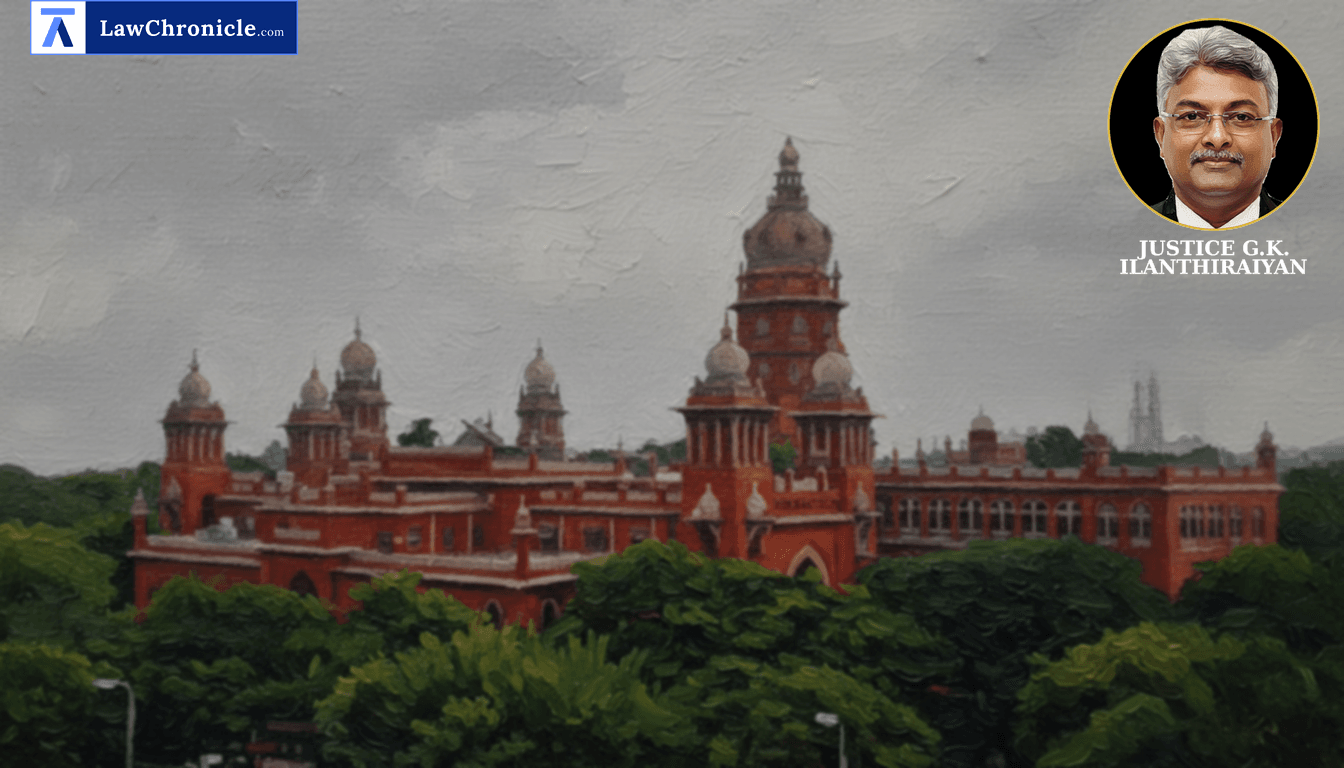
The Madras High Court has mandated the strict issuance of written summons for police enquiries, ruling that the unfettered power of investigation must not devolve into arbitrary harassment of citizens under the guise of interrogation. In a criminal original petition filed seeking protection from police high-handedness, a bench of Justice G.K. Ilanthiraiyan addressed the frequent grievances raised by litigants regarding harassment during the pendency of petition enquiries.
Key Takeaways
Mandatory Written Summons
Investigating officers are now strictly required to issue written summons specifying the date and time for appearance, ending the practice of informal or oral coercive calls to police stations.
Accountability through Documentation
By requiring the recording of enquiry minutes in the station diary, the court has created a transparent paper trail to check executive overreach during preliminary stages.
Judicial Oversight of Investigation
While reaffirming that courts cannot interfere with the 'mode' of investigation, the judgment establishes that Section 528 of Bharatiya Nagarik Suraksha Sanhita, 2023 serves as a safeguard against the violation of personal liberty during enquiries.
Court's Rationale on Investigation and Harassment
The Madras High Court emphasized that while investigation is a statutory power, it must be exercised within the legal framework. The bench noted that the term 'harassment' is subjective, requiring objective guidelines to protect both the citizen and the officer. The Bench observed that “An enquiry into a non cognizable offence or a cognizable offence is the unfettered powers of the Investigation Officers so long as the power to investigate/enquiry into these offences are legitimately exercised within the frame work of Chapter XIII of the Bharatiya Nagarik Suraksha Sanhita, 2023. Although the Sanhita empowers the Magistrate to be a guardian in all the stages of the police investigation, there is no power envisaging him to interfere with the actual investigation or the mode of investigation. It is in this background that numerous petitions complaining of harassment are being reported and filed before this Court seeking for directions to refrain the police officials from harassing the persons named in a complaint.”
Ratio
The inherent power of the High Court under Section 528 of Bharatiya Nagarik Suraksha Sanhita, 2023 can be invoked to prevent harassment under the guise of an enquiry; police officers must exercise their unfettered power of investigation strictly within the statutory framework by issuing written summons and maintaining official records of all enquiries as per the guidelines established in Lalita Kumari Vs. Government of Uttar Pradesh and others (2013 CaseBase(SC) 771).
Background
The petitioner approached the High Court complaining that the Peralam Police Station was harassing him under the pretext of an enquiry regarding a complaint registered in C.S.R.No.598 of 2026. The State, represented by the Additional Public Prosecutor, contended that a petition enquiry was merely pending based on a complaint given by a de-facto complainant.
The Madras High Court noted that while it normally does not interfere with the investigation conducted by a police officer, it would "not turn a blind eye to instances of harassment." It specifically referenced the necessity of following the landmark precedent in Lalita Kumari Vs. Government of Uttar Pradesh and others (2013 CaseBase(SC) 771) regarding preliminary enquiries. The petition was disposed of with mandatory guidelines to be followed by the respondent police.
Case Details:
Case No.: Crl.O.P.No.30620 of 2026
Case Title: N.Rajkumar Vs. The State and others
Appearances:
For the Petitioner(s): Mr. Joseph Chrishtopher Durairaj
For the Respondent(s): Mr. A.Amarnath, Additional Public Prosecutor for R1 & R2
Source: 2026 CaseBase(MAD) 28621
Similar Articles

 Breaking News


