


Magistrates Can Delete Parties Improperly Joined In Domestic Violence Cases: Madras HC
 Copy Link
 Share
 Save
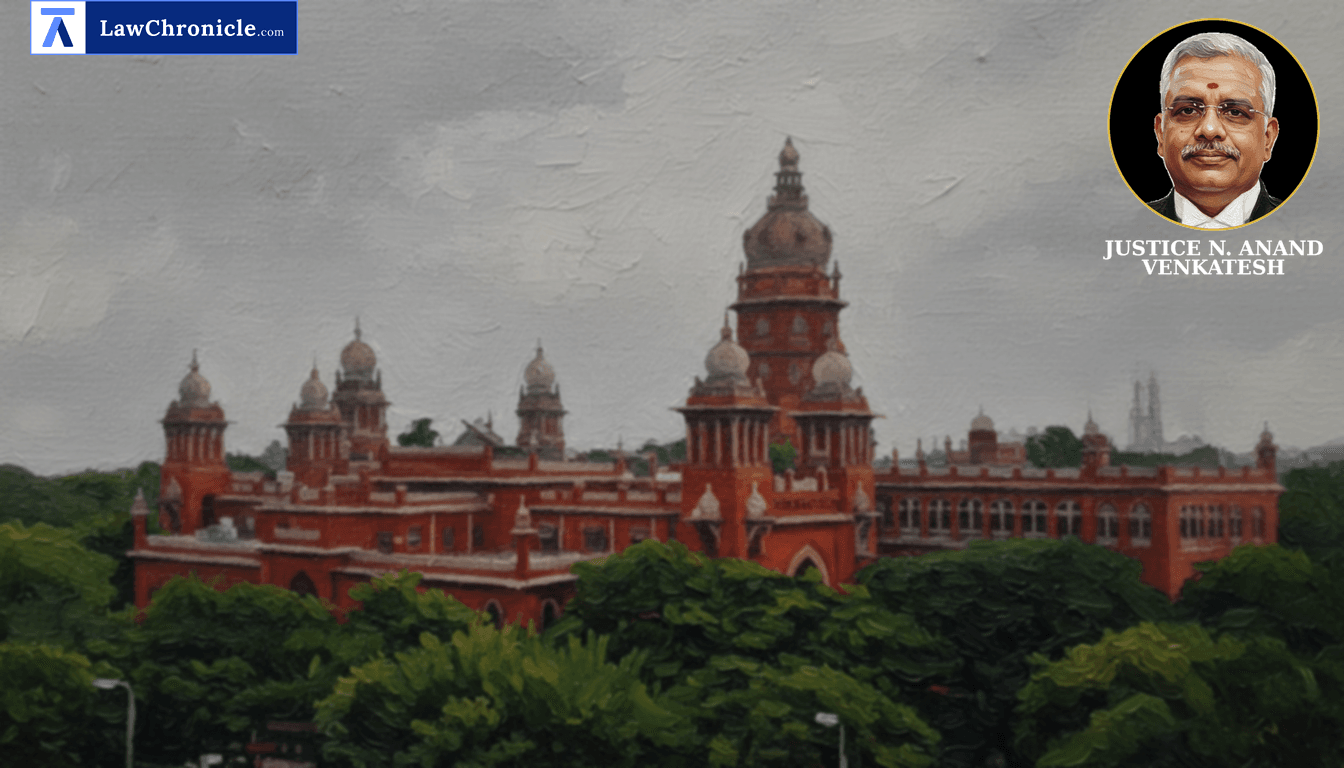
The Madras High Court has reinforced the procedural power of Magistrates to prune domestic violence complaints by deleting improperly joined parties, preventing the misuse of the Domestic Violence Act as a tool for harassment against extended family members. In a decisive ruling, the Bench clarified that while the High Court will not routinely invoke Article 227 of the Constitution of India to quash such proceedings unless there is a patent lack of jurisdiction, the trial courts are fully empowered to discharge parties who have been unnecessarily impleaded.
Justice N. Anand Venkatesh, presiding as a single-judge bench, heard the revision petition filed by a mother-in-law and sister-in-law seeking to strike off their names from a complaint pending before the Judicial Magistrate II, Mettur. The Madras High Court emphasized that the grievance regarding malicious impleadment should be primarily addressed by the trial magistrate using powers analogous to civil procedure rules.
Key Takeaways
Check on Procedural Harassment
Magistrates can now actively prevent the Domestic Violence Act from being used as a weapon of harassment by deleting 'all and sundry' joined as parties to the litigation.
Civil Procedure Integration
Trial courts can draw sustenance from the principles of Order 1 Rule 10(2) of the Civil Procedure Code, 1908 to strike out names of parties who are not necessary for the adjudication of the dispute.
High Court's Limited Intervention
Under Article 227 of the Constitution of India, the High Court will only strike off proceedings in domestic violence cases where there is a clear and patent lack of jurisdiction by the lower court.
Relief for Distant Relatives
Petitioners in domestic violence cases who feel they have been added solely to cause distress can now seek immediate deletion at the Magistrate level without awaiting a full trial.
Magistrates Empowered to Strike Off Improperly Joined Respondents
The Madras High Court noted that the issue regarding the deletion of parties in domestic violence proceedings is no longer res integra and is squarely covered by the Full Bench decision in Arul Daniel and others v. Suganya and others. The Court highlighted that the Magistrate is not a silent spectator when parties are improperly joined but has the authority to ensure the process of law is not abused.
The Bench observed that "Taking a cue therefrom, it would be open to any of the Respondent(s), at any stage of the proceeding, to apply to the Magistrate to have their names deleted from the array of Respondents if they have been improperly joined as parties. For this purpose, the Magistrate can draw sustenance from the power under Order 1, Rule 10(2) of the C.P.C. A judicious use of this power would ensure that the proceedings under the D.V. Act do not generate into a weapon of harassment and would prevent the process of Court from being abused by joining all and sundry as parties to the lis."
Ratio
In proceedings under the Domestic Violence Act, the Magistrate possesses the power to delete the names of respondents who have been improperly joined. This power is derived from the principles enshrined in Order 1 Rule 10(2) of the Civil Procedure Code, 1908. Furthermore, the High Court shall exercise its jurisdiction under Article 227 of the Constitution of India to strike off such proceedings only in instances where the Magistrate suffers from a patent lack of jurisdiction.
Background
The dispute arose when the respondents (daughter-in-law and another) initiated proceedings under the Domestic Violence Act in D.V.O.P. No. 15/2026 before the Judicial Magistrate II, Mettur. The petitioners, being the mother-in-law and sister-in-law, were arrayed as respondents in the said case. They approached the Madras High Court seeking to strike off the complaint against them, contending that they were added merely to be harassed and that the proceedings constituted an abuse of the process of law.
The petitioners sought relief under Article 227 of the Constitution of India. However, the High Court, relying on the precedent set in Arul Daniel and others v. Suganya and others, determined that the appropriate remedy lies before the Magistrate. The Madras High Court disposed of the petition by granting the petitioners the liberty to file a deletion application before the trial court, while also dispensing with their personal appearance during those proceedings.
Case Details:
Case No.: CRP No. 6526 of 2026
Case Title: Ambika & Anr. Vs Aarthi & Anr.
Appearances:
For the Petitioner(s): Mr.M.Elango
Source: 2026 CaseBase(MAD) 28348
Similar Articles
 Breaking News


