

Madras High Court Affirms Leave To Sue Public Trust Over Healthcare Facility Lease
 Copy Link
 Share
Share Save
Save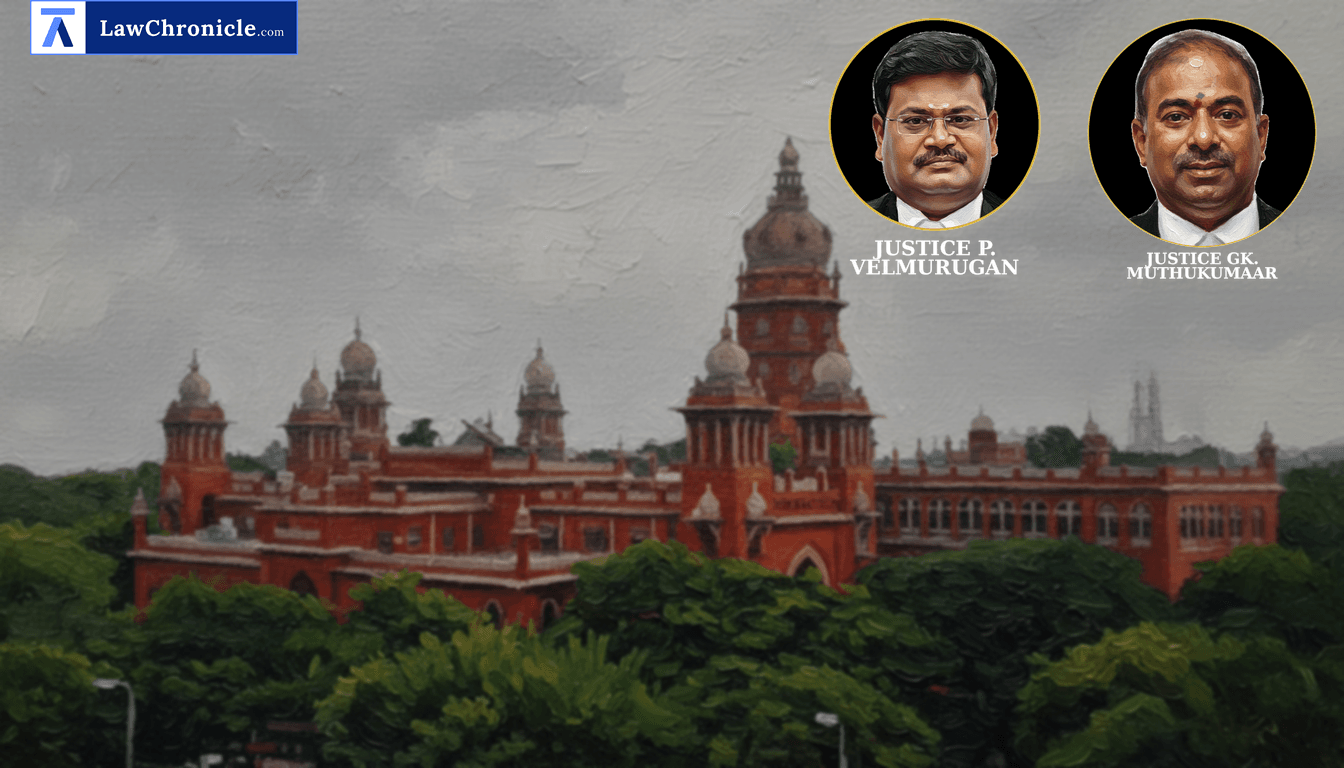
In a decisive intervention for the transparency of public charitable assets, the Madras High Court has cleared the path for a representative suit challenging a multi-decade lease of prime Chennai land to a private healthcare provider, ruling that allegations of restrictive bidding and lack of national reach warrant judicial scrutiny under Section 92 of the Code of Civil Procedure, 1908.
A division bench of Justice P. Velmurugan and Justice GK. Muthukumaar delivered the judgment while hearing an appeal filed by the Andhra Mahila Sabha Trust against an order of a single Judge that granted leave to two interested persons to institute a suit against the Trust's decision to enter into a long-term commercial arrangement.
Key Takeaways
Interested Persons' Right to Sue
Confirms that life members and descendants of founders possess the requisite 'interest' under Section 92 to challenge administrative decisions of a public trust.
Transparency in Asset Management
Highlights that prime trust properties must be managed through wide-reaching competitive processes to ensure the best possible value for charitable objectives.
Judicial Threshold for Leave
Establishes that at the stage of granting leave to sue, courts need only verify the existence of a prima facie case of mismanagement rather than the ultimate merits of the dispute.
Section 92 of CPC
The Madras High Court noted that the appellant, being a registered public charitable trust, is subject to the protective jurisdiction of the Court. The bench observed that while a Trust Board has the power to engage third parties to augment revenue, such actions must not defeat the scope and object of the Trust. The bench emphasized that the primary concern at the leave-granting stage is the nature of the allegations regarding the activities of a public charitable trust.
The Madras High Court expressed that “At the time of granting leave, the Court need not look into as to whether the plaintiff would succeed the case on merits. Under these circumstances, this Court does not find any reason to interfere with the impugned order. ... In this case, the Trust is a public charitable trust and the allegations made by the interested persons appear to be serious in nature.”
Ratio
The Madras High Court held that when a public charitable trust undertakes a significant alienation or long-term licensing of its prime assets, the failure to conduct a wide-reaching and transparent competitive process: such as limiting advertisements to local editions rather than national reach, constitutes a prima facie ground for 'interested persons' to invoke Section 92 of the Code of Civil Procedure, 1908 for judicial scrutiny, regardless of the high standing of the Trust's individual board members.
Background
The dispute arose when the Andhra Mahila Sabha Trust decided to utilize its property in R.A. Puram, Chennai, to establish a multi-specialty hospital. The Trust issued an Expression of Interest (EOI) and subsequently entered into a Leave and Licence Agreement (later registered as a lease deed) with Krishna Institute of Medical Sciences Limited (Respondent 13) for a period initially set at 26 years, later revised to 20 years. Two plaintiffs, asserting they were 'interested persons' due to past administrative roles and family ties to founders, challenged the transaction. They alleged that the EOI was a "facade" published only in Chennai editions of newspapers to exclude wider competition and facilitate a pre-decided bidder.
The Trust defended its decision as a commercial necessity taken by a Board comprising eminent jurists and retired IAS officers to revive the Trust's revenue. They argued the plaintiffs were "proxies" for corporate rivals. However, the High Court maintained that the legality of the document and the adequacy of the bidding process were matters for trial. The Madras High Court found no perversity in the single Judge's order, as the Indian Trusts Act, 1882 principles regarding the fiduciary duties of trustees and the requirements for alienation of trust property under Section 36 of the Indian Trusts Act, 1882 were central to the underlying dispute.
Case Details:
Case No.: OSA No. 146 of 2026
Case Title: Andhra Mahila Sabha Trust v. Mrs.Lakshmi Murthy and others
Appearances:
For the Petitioner(s): Mr.Rahul Parthasarathy, Senior Counsel for Ms.Aparajitha Vishwanath
For the Respondent(s): Mr.P.S.Raman, Senior Counsel for Mr.K.Gowtham Kumar, Mr.A.P.Balaji, Mrs.Harshini Ranganathan, and Mr.K.Thambu Raja; Mr.Jeevan Hari; Mr.Abishek Jenasenan; Mr.A.K.Sriram, Senior Counsel for Mr.P.J.Rishikesh; Mr.V.Raghavachari, Senior Counsel for Mr.S.Santosh
Source: 2026 CaseBase(MAD) 22333
 Breaking News