

Citizen Vigilance Restores Decades-Old Infrastructure Project: SC
 Copy Link
 Share
Share Save
Save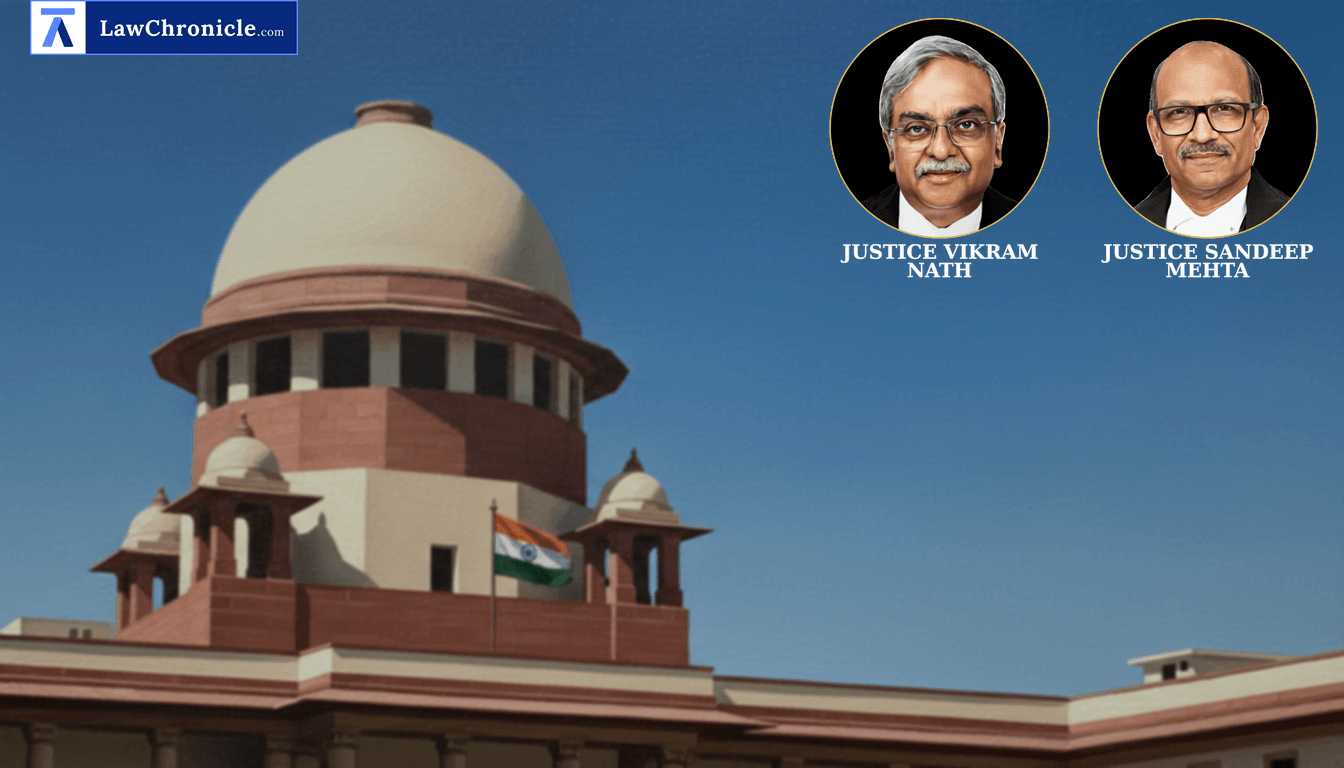
Breaking a two-decade-long administrative deadlock over a critical railway crossing, the Supreme Court has set strict deadlines for the construction of a Limited Use Subway while praising a private citizen for demonstrating exemplary civic vigilance. Resolving a public infrastructure dispute that languished since 2007, the top court held that genuine citizen-driven litigation stands on a completely different footing from frivolous proceedings clogging constitutional courts.
A bench comprising Justice Vikram Nath and Justice Sandeep Mehta issued binding time-bound directions to the State of Tamil Nadu and Southern Railway while disposing of an appeal against a Madras High Court order.
Key Takeaways
Strict Mandate for Infrastructure Timelines
State authorities and Southern Railway must complete their respective shares of work within six to eight months.
Judicial Praise for Bona Fide Litigants
Courts must recognize and encourage vigilant citizens who pursue public causes without personal interest.
End to Endless Monitoring
Acquiring firm undertakings and fixed timelines negates the need to keep writ petitions pending indefinitely.
Court's Observations and Directions
The Supreme Court took on record the assurances of the State Government and Southern Railway, noting that the project had progressed from mere planning to concrete implementation steps.
Commending the persistent efforts of the appellant, the Court, in its reasoning, observed: "These days, Writ Courts are frequently called upon to deal with proceedings styled as public interest litigations which, on closer scrutiny, do not advance any genuine public cause. The present matter stands on a different footing. The appellant has demonstrated how a vigilant and bona fide citizen can, through sustained and responsible engagement with public authorities and constitutional courts, draw attention to an issue affecting the community at large. Such constructive civic participation deserves acknowledgment."
The Court has following directions:
"The State authorities shall proceed with and complete the pending land acquisition proceedings and all other approvals and processes falling within their domain with utmost expedition. They shall ensure that the requisite land is made available to Respondent No. 2, Southern Railway, without avoidable delay so that the execution of the Railway portion of the LUS is not impeded.
Respondent No. 2 shall finalise the tender process within the time indicated before this Court and, upon award of the contract and availability of the requisite land, shall ensure completion of the work falling within its domain within a period of six months from the date of award of the contract. The State authorities shall, in the meantime, simultaneously proceed with the designs, estimates, administrative approvals and other necessary steps concerning the Highways portion of the project so that the work may proceed without any further avoidable delay.
Respondent Nos. 1, 3 and 4, on the one hand, and Respondent No. 2, on the other, shall file their respective compliance affidavits before this Court upon completion of the work falling within their respective domains and, in any event, within a period of eight months from the date of this judgment, setting out the steps taken in compliance with the directions contained herein. The Registry shall place the compliance affidavits before the Court upon their filing."
Ratio
When public utility projects reach an actionable execution phase with clear statutory compliance undertakings from state organs, constitutional courts ought to issue time-bound completion mandates and compliance affidavit filings rather than keeping monitoring petitions pending endlessly.
Background
The matter originated from Vaniyambadi in Tirupattur District, Tamil Nadu, where Level Crossing No. 81 divided the eastern and western parts of the town. In 2007, the State Government sanctioned a Road Over Bridge (ROB). Due to land acquisition challenges in built-up areas, the proposal shifted to a Road Under Bridge (RUB), for which acquisition was initiated under the Tamil Nadu Highways Act, 2001. Subsequently, joint inspections led to a further revised proposal for a Limited Use Subway (LUS) requiring less land acquisition.
The appellant filed a writ petition before the Madras High Court seeking directions to expedite construction within a fixed time frame. However, on 25.07.2025, the High Court disposed of the writ petition, observing that granting the relief would require continuous monitoring.
Aggrieved by the absence of specific time-bound completion directions, the appellant moved the Supreme Court. Satisfied with the tender and acquisition status reports placed on record by Southern Railway and the State authorities, the Supreme Court disposed of the appeal with mandatory timelines.
Case Details:
Case No.: Civil Appeal No. OF 2026 (Arising out of SLP (C) No.31444 of 2025)
Neutral Citation: 2026 INSC 903
Case Title: Madurai Farooq Ahmed v. The Principal Secretary to Government & Ors.
Source: 2026 CaseBase(SC) 821
 Breaking News