


Police Apology No Substitute for Due Care in Liberty Matters: SC Expunges Remarks
 Copy Link
 Share
 Save
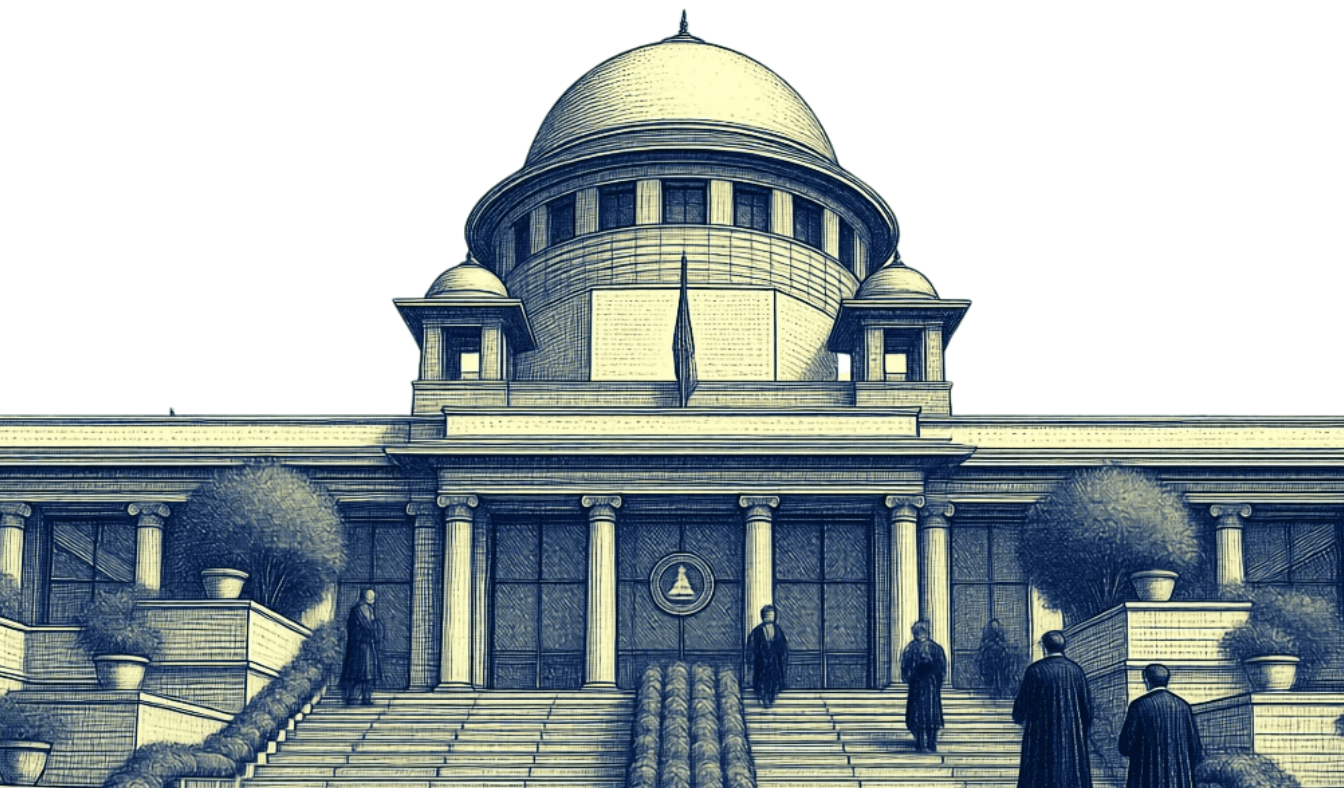
Accepting an unconditional apology from a senior police officer who illegally detained a developer, the Supreme Court ruled that tendering an apology cannot serve as a substitute for exercising due care when dealing with an individual's personal liberty. A three-judge bench comprising Justice Vikram Nath, Justice R. Mahadevan, and Justice Aparesh Kumar Singh heard an appeal filed by a senior Indian Police Service (IPS) officer seeking the expunction of harsh observations recorded against him by the Madras High Court.
Key Takeaways
Strict Duty in Preventive Detention: Statutory power impacting personal liberty must be exercised with extreme caution and strict adherence to statutory rules.
Apology Not a Safe Harbor: Tendering an unconditional apology does not absolve public authorities from their primary responsibility to act with due diligence.
Expunction of Judicial Remarks: Adverse judicial remarks against public officials may be expunged if an unconditional apology is accepted and future care is assured.
High Court Order Unaffected: Setting aside improper detention orders remains valid regardless of the expunction of personal remarks against the detaining officer.
Apology by IPS Officer
The Supreme Court carefully considered the officer's affidavit expressing remorse for failing to admit his mistake at the initial stage before the High Court. While accepting his apology and directing the deletion of the adverse comments, the bench issued a stern warning regarding statutory responsibilities. The Apex Court, in its reasoning, observed that "The exercise of power by a public authority must be guided by a careful appreciation of the facts and the applicable law. This assumes particular significance in matters of preventive detention, where the exercise of statutory power directly affects the liberty of an individual. Such power must, therefore, be exercised with utmost circumscription and in strict conformity with the requirements of law."
The Supreme Court further emphasized that “At the same time, we consider it appropriate to observe that an officer holding a senior position in the police administration is expected to appreciate the significance of the duties entrusted to him and the responsibility that accompanies the exercise of statutory powers. The appellant's expression of regret and his assurance to exercise greater care in the future are duly noted. We trust that the same shall be reflected in the discharge of his official functions hereafter. We also caution that the tendering of an apology cannot be regarded as a substitute for due care in the exercise of powers affecting the liberty of a person.”
Ratio
Public authorities exercising statutory powers of preventive detention are legally bound to act with utmost circumscription and strict conformity with the law. While judicial remarks reflecting on an officer's conduct may be expunged upon the acceptance of an unconditional apology, an apology cannot substitute the mandatory legal obligation of exercising due care when individual liberty is at stake.
Background
The matter originated from a dispute involving a real estate transaction. A complaint was registered under Sections 409, 420, 465, 468, 471, and 120-B of the Indian Penal Code, 1860 following allegations that directors of a development firm failed to hand over an apartment after receiving consideration and fraudulently mortgaged the property to third parties. Following their arrest, the Inspector of Police, Central Crime Branch-II, submitted a proposal for preventive detention. The appellant, who was then serving as the Commissioner of Police, Greater Chennai, issued a detention order under Section 3(1) of the Tamil Nadu Prevention of Dangerous Activities of Bootleggers, Cyber Law Offenders, Drug Offenders, Forest Offenders, Goondas, Immoral Traffic Offenders, Sand Offenders, Sexual Offenders, Slum-Grabbers and Video Pirates Act, 1982, classifying the director as a "Goonda".
The daughter of the detenue subsequently filed a Habeas Corpus Petition before the Madras High Court. The High Court quashed the detention order and recorded severe adverse observations against the police officer in paragraphs 6, 8, 10, and 19 to 23 of its judgment. The officer challenged these specific remarks before the Supreme Court.
Before the Apex Court, the officer offered an unconditional apology via affidavit for failing to recognize the error earlier. The Supreme Court accepted the apology and ordered the expunction of the adverse remarks, clarifying that its order would not alter the High Court's ruling to quash the detention order itself.
Case Details:
Case No.: Criminal Appeal No(s). of 2026 (Arising out of SLP (Crl.) No. 16725 of 2026)
Neutral Citation: 2026 INSC 1186
Case Title: A. Arun v. Varsha Sharma & Ors.
Appearances:
For the Petitioner(s): Mr. Sidharth Luthra, Senior Advocate
For the Respondent(s): Mr. Prashanto Chandra Sen, Additional Advocate General (for R-2 to 5); Mr. Vairawan A.S., Advocate (for R-1)
Source: 2026 CaseBase(SC) 9524
Similar Articles


 Breaking News


